
Beliefs and figures
The evil eye in Sicily
The “occhiu” that strikes out of envy or excessive admiration, drops of oil in a plate of water, the secret formula and the amulets, from Saint Lucy's eye to red ribbons: the history and rites of a very ancient belief.
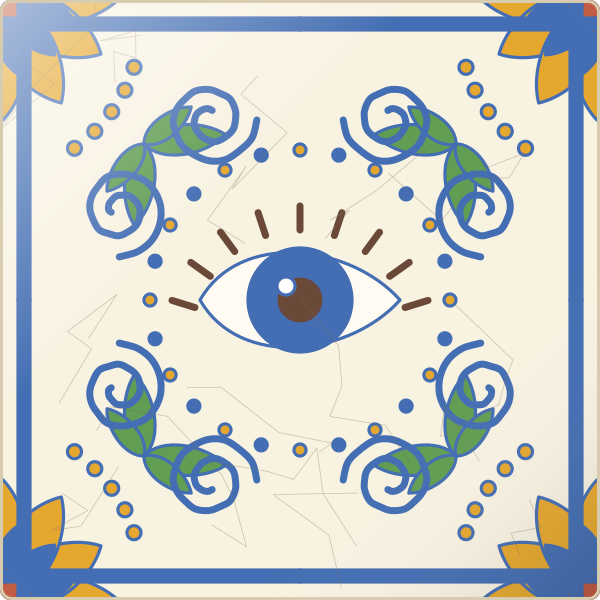
In Sicily people say pigghiari l'occhiu, to catch the eye, or to be struck by the affascinu. It is the belief that a glance charged with envy, or even just with excessive admiration, can pass on harm: sudden headaches, tiredness, bad luck, a plant that withers, a baby that will not stop crying. It is the evil eye, one of the oldest and most widespread beliefs of the Mediterranean.
An ancient heritage
The Greeks called it baskanía, the Romans fascinum. Plutarch devoted one of his Table Talk questions to the subject, asking whether some people could really do harm with their eyes, and proposed a “physical” explanation: emanations capable of striking would come out of the eyes, especially when driven by violent passions such as envy. Pliny the Elder mentioned peoples said to have the power of bewitching with their eyes. The phallic amulets and the hands making apotropaic gestures of Roman times already served to deflect that glance.
The oil test
The best-known way of finding out whether someone has been struck is the oil rite. A woman who knows the formula takes a deep plate full of water and lets a few drops of oil fall into it, often from her finger or a teaspoon, making signs of the cross and reciting secret words. If the drops stay compact and round, there is nothing. If they spread, break up or form an “eye”, the evil eye is present. The rite is repeated until the oil behaves normally: then the harm is undone.
The formula is passed on in person and only at certain times, such as Christmas Eve, and must not be revealed, or it loses its power. Every family and every town has its own variant.
The amulets
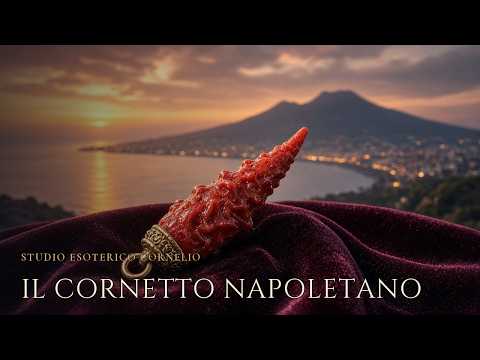
To protect themselves, Sicilians have always had a rich repertoire of objects. The most characteristic is the eye of Saint Lucy: the operculum of a small sea snail, with a spiral drawn on its surface, which looks like an eye and recalls the Syracusan saint who is patron of sight. It was worn round the neck, kept in a wallet, sewn into children's clothes. Beside it came the red horn, the hand making horns, the horseshoe, salt, garlic, red ribbons tied to cradles, holy pictures and small blessed pouches.
Ernesto De Martino's gaze
In the 1950s the anthropologist Ernesto De Martino studied “fascination” in Lucania and wrote about it in Sud e magia, a fundamental book. He read these practices not as superstitions to be mocked, but as cultural responses to a condition of precariousness: in a world exposed to illness, poverty and uncertainty, the rite made it possible to give harm a name and to feel protected. A reading that applies to Sicily too.
Between irony and respect
Today many Sicilians speak of the evil eye with a smile, yet quite a few keep a little horn or a Saint Lucy's eye in a drawer. It is a knowledge suspended between play and seriousness, between faith and superstition, which has crossed the centuries almost intact. The famous Neapolitan saying holds on the island too: it's not true, but I believe it.
Watch the video
Sources and further reading
- Plutarch, Table Talk V 7
- Pliny the Elder, Natural History VII 16-18
- G. Pitrè, Usi e costumi, credenze e pregiudizi del popolo siciliano (1889)
- E. De Martino, Magic: A Theory from the South (1959)
Read next

The Donne di fora, the “ladies from outside”
Mysterious ladies who travelled at night in companies, visited clean houses and could heal or bring illness: the Sicilian fairies who appeared in the trials of the Inquisition in the sixteenth and seventeenth centuries.

The souls of the beheaded
In Palermo the executed were not forgotten: their souls, purified by punishment, became protectors of the living. The cult of the “armi santi” along the Oreto river, between ex-votos and night prayers.

Spells and counter-spells
The "fattura", the binding, the "thing done": in traditional Sicily inexplicable misfortunes could have an author, and undoing them required people who knew how to remove what others had done.
