
Beliefs and figures
The moon in Sicilian beliefs
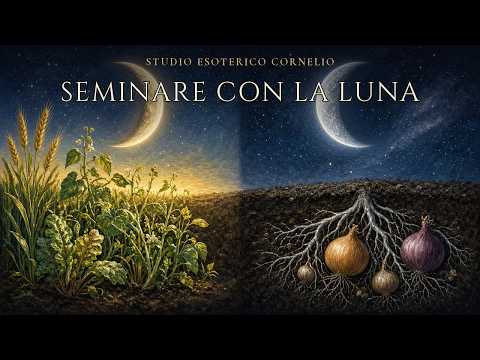
Sowing under a waning moon, cutting hair under a waxing one, bottling wine in the right phase: for centuries the moon governed the gestures of Sicilian rural life.
Before printed calendars and clocks, the moon was the most visible timekeeper. Its phases, waxing, full, waning and new, marked out the month and, according to tradition, influenced the growth of plants, animals and people. In rural Sicily these beliefs guided everyday gestures, and Giuseppe Pitrè and Salvatore Salomone Marino collected hundreds of them at the end of the nineteenth century.
What grows and what wanes
The principle is simple: with a waxing moon everything grows, with a waning moon everything slows down and settles. That is why it was said that hair cut under a waxing moon grows back stronger, while hair cut under a waning moon grows slowly. Crops meant to develop above ground were sown in one phase, root crops in another. Timber was cut under a waning moon, because it was believed to be drier and more durable.
Wine and the cellar
In the cellar the moon counted for a great deal. Wine had to be racked and bottled under a waning moon, because under a waxing one it might "stir" and spoil. Preserves, bread and cheese also had their favourable days. These rules were handed down orally, through proverbs and rhymes, and were often confirmed by the lunari, the popular almanacs sold at fairs.
Births and health
The moon was also linked to the human body. It was said that births increased at the changes of phase, above all at full moon, and that the moon influenced the blood, the humours and sleep. Midwives watched the sky, and some illnesses were treated on particular days of the lunar cycle. From the same root comes the word "lunatic", a person of unstable mood, almost ruled by the moon.
Ancient roots
Many of these rules go back to ancient authors. Pliny the Elder and Palladius, in their treatises on agriculture, recommended cutting timber and sowing in particular lunar phases. Sicilian folk tradition preserved this knowledge, blending it with Christianity: the moon was also the face of God in the night, and the first sickle of the new moon was greeted with a prayer.
Belief and observation
Today agronomists debate how much of these rules is well founded; many find no experimental confirmation, others reflect observations of season rather than of moon. But the moon remains a deep symbol of the island, linked to the cycles of land and sea, like the legends of Colapesce and the rites of the Feast of the Dead. The first to collect these beliefs was Giuseppe Pitrè.
Watch the video
Sources and further reading
- G. Pitrè, Usi e costumi, credenze e pregiudizi del popolo siciliano (1889)
- G. Pitrè, Proverbi siciliani (1880)
- Pliny the Elder, Natural History XVIII
- Palladius, Opus agriculturae
- S. Salomone Marino, Costumi e usanze dei contadini di Sicilia (1897)
Read next
The Donne di fora, the “ladies from outside”
Mysterious ladies who travelled at night in companies, visited clean houses and could heal or bring illness: the Sicilian fairies who appeared in the trials of the Inquisition in the sixteenth and seventeenth centuries.
The evil eye in Sicily
The “occhiu” that strikes out of envy or excessive admiration, drops of oil in a plate of water, the secret formula and the amulets, from Saint Lucy's eye to red ribbons: the history and rites of a very ancient belief.

The souls of the beheaded
In Palermo the executed were not forgotten: their souls, purified by punishment, became protectors of the living. The cult of the “armi santi” along the Oreto river, between ex-votos and night prayers.
