
Traditions and objects
Amulets of Sicily: horns, eyes and "brevi"
The red horn, the hand making horns, St Lucy's eye, the "breve" sewn into the lining: the objects with which Sicily defended itself for centuries against the envious gaze.

In Sicily, as throughout the Mediterranean, the most feared danger came not from spirits but from human eyes. A gaze loaded with envy, the occhiu malu, could make a child ill, wither a plant, put out the good fortune of a household. Against it a repertoire of protective objects developed, which Giuseppe Pitrè described in the nineteenth century with a cataloguer's patience and which partly survives to this day.
Horns and little horns
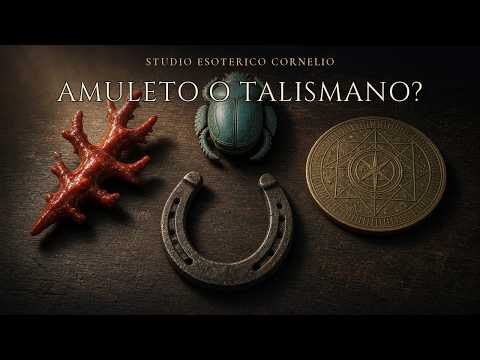
The most widespread is the horn, red, of coral or bone, sometimes of silver or gold. Its shape recalls the strength and fertility of horned animals and, for some, the horn of plenty of ancient mythology. To the same family belongs the gesture of the hand with index and little finger extended, made to "break" an influence; and in many houses the horns of an ox or a ram were hung above the door. The colour red, like that of coral, was considered a defence in itself.
An eye against the eye
An ancient principle holds that like is fought with like: against the evil gaze, another eye is shown. In Sicily the most characteristic amulet is the so-called eye of St Lucy, the operculum of a sea snail, a small spiral chalky disc, white on one side and coloured on the other, that the sea washes up on the beaches. Set in silver or kept in a pocket, it protects sight and health, and bears the name of the Syracusan saint who protects the eyes.
"Brevi" and scapulars
Beside natural objects there were religious ones. The breve was a small sewn cloth pouch holding a holy image, a written prayer, sometimes relics or blessed herbs, to be worn round the neck or sewn into the lining of clothes, especially those of newborns. Medals, scapulars and pictures of saints lived happily alongside horns and horseshoes: for the popular mind protection was one, and every means was good.
Salt, iron and keys
Ordinary objects played a part too. A horseshoe found in the street, a nail, a key, a handful of salt thrown over the shoulder or put in a pocket before a difficult meeting. Salt, which preserves and purifies, was a universal antidote; iron, a hard metal forged in fire, drove back evil forces. Pitrè records dozens of these gestures, often accompanied by short formulas murmured under one's breath.
Today
Many of these amulets have become souvenirs, joke objects or jewellery. Yet the gesture of giving a little horn to a newborn, or of keeping a St Lucy's eye in one's wallet, keeps something of its ancient function: a small sign of affection and protection. To understand what they protected against, see the evil eye in Sicily; for those who knew how to lift it, the secret prayers handed down on Christmas Night.
Watch the video
Sources and further reading
- G. Pitrè, Usi e costumi, credenze e pregiudizi del popolo siciliano (1889)
- E. De Martino, Magic: A Theory from the South (1959, Eng. trans. 2015)
- G. Bonomo, Scongiuri del popolo siciliano (1953)
- Museo etnografico siciliano Giuseppe Pitrè, Palermo, collections
Read next

The coral of Trapani
From the sixteenth to the eighteenth century the masters of Trapani turned red coral into nativity scenes, crucifixes, holy-water stoups and amulets sought by the courts of Europe: an art born of the sea and of faith in the power of red.

The Opera dei Pupi
Paladins of wood and tin, battles against the Saracens, the "cuntu" of the storytellers: the Sicilian puppet theatre, a UNESCO Masterpiece of the Oral and Intangible Heritage of Humanity.

The Donne di fora, the “ladies from outside”
Mysterious ladies who travelled at night in companies, visited clean houses and could heal or bring illness: the Sicilian fairies who appeared in the trials of the Inquisition in the sixteenth and seventeenth centuries.
